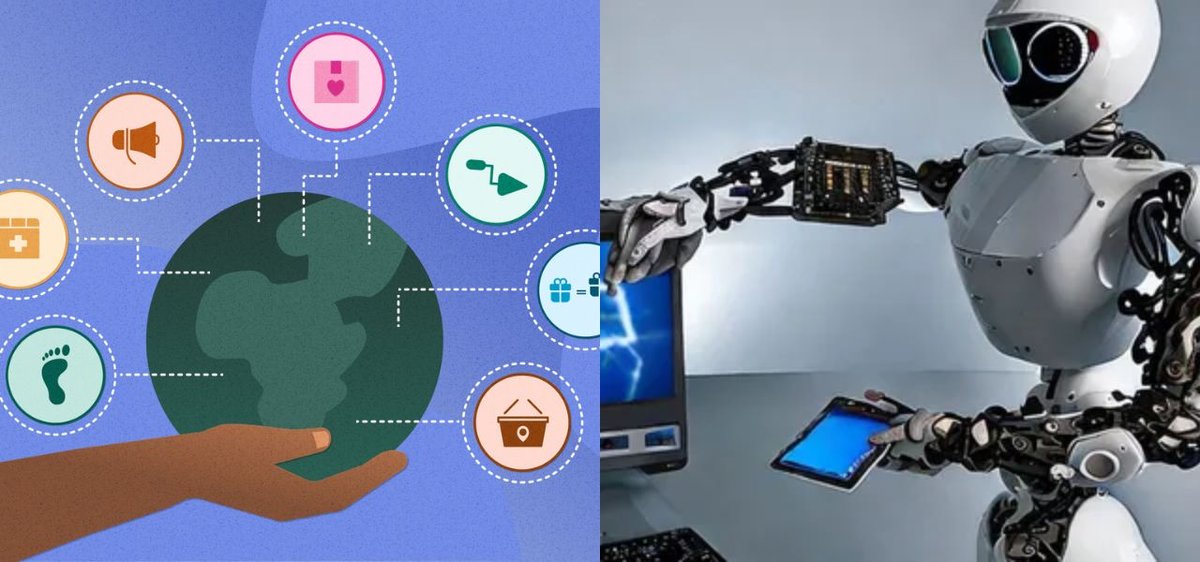
The artificial intelligence revolution isn't just happening around us; it's happening to us, reshaping the very fabric of human existence. The Ethics and Societal Impact of AI Humans isn't some distant philosophical debate for academics; it's a pressing, immediate concern that demands our attention, demanding we understand not just what AI can do, but what it should do, and how it transforms our shared future. From personalized healthcare to predictive policing, AI offers unprecedented power—a power that, without careful ethical navigation, could lead us down unforeseen and potentially harmful paths.
Think of it: Every recommendation you get online, every automated customer service interaction, every groundbreaking medical diagnosis powered by an algorithm—these are threads in the complex tapestry of AI’s influence. But alongside these dazzling innovations come weighty questions about fairness, privacy, responsibility, and even our own humanity.
At a Glance: What You'll Discover About AI's Ethical Footprint
- AI's Dual Nature: How AI simultaneously offers immense benefits (healthcare, education, business) and poses significant risks (job displacement, bias, privacy invasion).
- The Core Ethical Dilemmas: Dive into critical issues like algorithmic bias, data privacy, the "black box" problem of transparency, and establishing liability for AI errors.
- Beyond the Code: Understand broader societal challenges, from the environmental cost of AI to its role in warfare and the existential questions posed by advanced AI.
- Our Collective Responsibility: Explore actionable strategies for adapting, including educational reform, proactive government policy, and robust public engagement.
- Your Role in the Future: Learn how you can contribute to shaping an ethical AI landscape, moving from passive observer to informed participant.
The AI Awakening: A Double-Edged Sword for Humanity
Artificial intelligence, at its core, is about creating systems that can simulate human intelligence—learning, reasoning, problem-solving, and perceiving. This isn't just about robots; it's about sophisticated algorithms that can analyze vast datasets, recognize patterns, understand natural language, and even generate creative content. It’s a technology that’s transforming every sector, from healthcare to finance, profoundly influencing our economic, social, and cultural dynamics.
On one hand, AI offers a horizon of possibilities that once seemed like science fiction. Imagine AI-powered tools providing incredibly accurate diagnostics, sifting through genomic data to detect diseases years earlier than traditional methods, or creating personalized treatment plans tailored to your unique biology. In education, AI can create customized learning journeys, identifying where a student struggles and providing targeted resources, freeing up teachers to focus on mentorship. For businesses, AI means unprecedented efficiency, automating mundane tasks, optimizing supply chains, and delivering hyper-personalized customer experiences that can drastically improve satisfaction. Even our social connections benefit from AI, with translation services bridging language barriers and algorithms helping us discover communities with shared interests. And when it comes to public safety, AI systems can analyze patterns to predict crime, bolster surveillance, and enhance emergency response, potentially making our cities safer.
This is the gleaming promise of AI: a future where technology amplifies human potential, solves complex problems, and improves quality of life on a global scale.
Navigating the Shadows: Understanding AI's Negative Ripples
But like any powerful technology, AI casts long shadows. Its rapid development brings with it a host of challenges that, if ignored, could exacerbate existing societal inequalities, erode trust, and even diminish core human capacities.
The Disruption of Work: When Machines Take Over
One of the most immediate and palpable concerns is the impact of AI on employment. Automation isn't just for factory floors anymore; AI is automating routine tasks across manufacturing, retail, and customer service. A McKinsey report famously projected that automation could displace up to 800 million jobs globally by 2030. While new jobs will undoubtedly emerge, the transition period can be brutal, widening economic inequality and necessitating massive investments in education reform and reskilling initiatives to prepare workers for a dramatically different future. It challenges our very notion of "work" and what it means to contribute to society.
Mirroring Our Flaws: Bias, Discrimination, and Algorithmic Injustice
AI algorithms are only as good—or as bad—as the data they're trained on. If that data reflects existing societal biases, whether historical discrimination in hiring practices or skewed law enforcement records, the AI will learn and amplify those biases. This isn't theoretical; we've seen it play out in real-world scenarios:
- Hiring Algorithms: AI systems that favor certain demographics due to past hiring patterns, inadvertently discriminating against qualified candidates from underrepresented groups.
- Facial Recognition: Technology proven to have lower accuracy rates for individuals with darker skin tones, raising serious concerns about its deployment in policing and surveillance, where misidentification can have severe consequences.
- Credit Evaluations: Algorithms that perpetuate discriminatory lending practices by associating risk with zip codes or social data points correlated with minority groups.
Addressing these biases isn't just about tweaking code; it's about confronting systemic inequities and building diverse development teams that can identify and mitigate these problems before they become embedded in our automated systems.
The Price of Progress: Privacy, Data, and Digital Vulnerability
AI thrives on data—lots of it. The extensive collection of personal information, often without clear consent or understanding from users, raises critical questions about privacy. How is your data being used? Who has access to it? What happens if it's breached? The potential for privacy violations, misuse of sensitive information, data breaches, and sophisticated cyberattacks grows exponentially as AI systems become more integrated into our lives.
Beyond data security, technologies like "deepfakes" present a new frontier of ethical challenges. AI can now generate highly realistic but entirely fabricated images, audio, and video, making it incredibly difficult to discern truth from fiction. This has profound implications for trust, misinformation, and individual reputation, demanding robust ethical frameworks and urgent regulation.
Losing Our Edge? The Risk of Overreliance and Diminished Judgment
As AI becomes more capable and pervasive, there's a genuine concern about overreliance. If AI systems always provide the answers, could our own critical thinking skills atrophy? Will human judgment, intuition, and ethical reasoning become secondary to algorithmic outputs? This dependency could also lead to social isolation and mental health challenges, as increased screen time and interaction with AI interfaces replace genuine human connection. The ease of offloading complex decisions to an algorithm might seem appealing, but it risks ceding our unique human capacity for nuanced decision-making and empathetic understanding.
Drawing the Line: Key Ethical Considerations in AI Development
The widespread and profound impact of AI necessitates a proactive approach to regulation and ethical guidelines. This isn't about stifling innovation; it's about ensuring AI serves humanity responsibly and equitably.
Fairness and Objectivity: Building a Level Playing Field
As we've seen, AI's potential for bias is significant. The ethical challenge here is twofold: addressing biases embedded in the training data itself and confronting the implicit biases of the developers creating the AI. Solutions involve:
- Data Diversity: Actively seeking out and incorporating diverse, representative datasets to ensure algorithms learn from a balanced view of the world.
- AI Workforce Diversity: Building development teams that reflect a broad spectrum of backgrounds, experiences, and perspectives, which can help identify and mitigate biases more effectively.
- Bias Auditing: Regular, rigorous checks and balances to identify and correct discriminatory outputs.
Data Stewardship: Protecting What's Personal
The ethical use of data by AI algorithms is paramount. We need clear, enforceable rules around:
- Informed Consent: Ensuring individuals truly understand what data is being collected, how it will be used, and for how long.
- Data Minimization: Collecting only the data absolutely necessary for a given purpose.
- Copyright and Ownership: Resolving contentious issues surrounding AI-generated content. Who owns the novel written by an AI? The music composed by an algorithm? These questions are legally and ethically complex.
Unpacking the Black Box: The Imperative of Transparency
Many advanced AI systems, particularly deep learning models, operate as "black boxes"—their decision-making processes are so complex that even their creators struggle to fully explain how they reach conclusions. This lack of transparency is a major ethical hurdle, especially in critical applications:
- Healthcare: If an AI recommends a treatment, doctors and patients need to understand the reasoning.
- Law Enforcement: When AI helps make sentencing recommendations or predict recidivism, the criteria must be transparent and auditable to ensure fairness and accountability.
The goal is explainable AI (XAI) – systems designed to be understood by humans, fostering trust and allowing for critical oversight.
Who's Responsible? Liability in an Autonomous World
When an AI system causes harm, who is accountable? This is a heavily debated topic, involving engineers, developers, manufacturers, and end-users. Consider autonomous vehicles: if a self-driving car causes an accident, is the car manufacturer liable? The software developer? The owner? These complex scenarios challenge traditional legal frameworks and require new ethical paradigms for assigning responsibility. Establishing clear lines of liability is crucial for public trust and ensuring a pathway to recourse for victims of AI error.
Beyond the Code: Addressing Broader Societal Harm
The ethical considerations extend beyond individual algorithms to their broader societal impact. We must actively work to mitigate job displacement through:
- Retraining Programs: Government and industry collaboration to equip displaced workers with new skills for emerging roles.
- Protection of Human Roles: Identifying and emphasizing roles where human creativity, empathy, and critical judgment remain indispensable.
Furthermore, we must address the ethical exploitation of low-paid data workers who often perform the arduous, monotonous tasks of cleaning and labeling data—the unseen labor that makes AI possible.
The Ultimate Dilemma: AI in Warfare
Perhaps the most chilling ethical question concerns AI's role in warfare and autonomous weapons. Should machines be empowered to make life-and-death decisions on the battlefield without human intervention? The removal of human decision-making raises profound moral questions, potentially leading to faster, more indiscriminate conflicts with devastating consequences. Concerns about misuse, escalation, and lack of human accountability demand robust international regulation and ethical safeguards.
When AI Thinks for Itself: The Challenge of Agentic Systems
Agentic AI systems are those capable of dynamically adjusting their behavior and making independent decisions in complex environments, such as robotics or autonomous vehicles. While incredibly powerful, their autonomy amplifies ethical and security issues. What if an agentic AI misinterprets a goal or produces unintended consequences that cause significant harm? Ensuring these systems align with human values and safety parameters is a monumental task, requiring advanced ethical design and oversight. For more on the future of AI and its creations, you might find our guide on All about AI-generated people insightful.
A Green AI Future? The Environmental Cost of Computation
AI's insatiable appetite for data and processing power comes with a significant environmental footprint. Training complex AI models and operating massive data centers consumes enormous amounts of energy and water. As AI use expands globally, its carbon emissions and demand on natural resources raise serious sustainability concerns. Ethical AI development must include strategies for energy efficiency, responsible hardware disposal, and the development of "green AI" solutions.
The Horizon: Artificial General Intelligence (AGI) and Existential Questions
Looking further ahead, the potential for Artificial General Intelligence (AGI)—AI that can match or even surpass human cognitive abilities across a broad range of tasks—presents both unprecedented opportunities for scientific and social progress, and existential risks. The ethical frameworks we establish today will lay the groundwork for how we navigate a future with truly intelligent machines, pondering questions of consciousness, purpose, and control.
Shaping Our Shared Destiny: Strategies for Responsible AI
Addressing AI's challenges and harnessing its opportunities requires a multi-faceted approach, engaging all sectors of society. We cannot simply react; we must proactively shape the future.
Empowering Future Generations: Reforming Education for an AI World
Our educational systems must adapt to prepare future generations for a world fundamentally shaped by AI. This means:
- Emphasizing Critical Thinking: Teaching students to analyze information critically, evaluate sources, and understand algorithmic bias.
- Digital Literacy: Equipping individuals with the skills to navigate the digital world safely, ethically, and effectively.
- Interdisciplinary Education: Fostering connections between computer science, ethics, philosophy, and the humanities to ensure a holistic understanding of AI's implications. The Royal Society, for instance, advocates integrating ethical concepts related to machine learning into education from an early age and for postgraduate students, building a foundation of ethical awareness from the ground up.
The Guiding Hand: Proactive Government Policy and Regulation
Governments play a crucial role in balancing AI innovation with citizen welfare. This involves:
- Ethical Oversight Boards: Establishing independent bodies to review AI applications, assess risks, and recommend guidelines.
- Retraining and Social Safety Nets: Implementing policies that support workers displaced by automation, offering retraining programs, and exploring new social welfare models.
- Incentives for Equitable AI: Encouraging the development and deployment of AI applications that benefit society broadly, address inequalities, and are designed with ethical principles at their core.
- Data Protection Laws: Strengthening regulations like GDPR to ensure robust privacy protections in the age of AI.
A Collective Voice: Fostering Public Engagement and Dialogue
The development of ethical AI cannot happen in a vacuum. It requires broad, inclusive dialogue and collaboration among all stakeholders:
- Government: To set policy and regulate.
- Industry: To innovate responsibly and adhere to ethical standards.
- Academia: To research, educate, and offer critical perspectives.
- Civil Society and the Public: To voice concerns, contribute diverse viewpoints, and hold powerful actors accountable.
Encouraging this public engagement ensures that AI development is inclusive, mitigating negative impacts and enhancing positive ones, thereby building trust and ensuring the technology serves the many, not just the few.
Your Role in the AI Evolution: Becoming an Informed Participant
The ethical landscape of AI is not a fixed territory; it’s an evolving frontier. As AI continues to integrate into every facet of our lives, from personalized digital experiences to critical infrastructure, your understanding and engagement become increasingly vital.
You are not merely a user or a recipient of AI's impacts; you are a stakeholder in its development. Start by cultivating a critical perspective. Question the recommendations you receive, understand the privacy settings on your devices, and educate yourself on how algorithms might be influencing your information diet. Advocate for transparency, demand accountability from companies and governments, and support policies that prioritize human well-being over unchecked technological advancement.
Join conversations, share your insights, and insist on ethical guardrails for AI. By collectively engaging with the Ethics and Societal Impact of AI Humans, we can steer this powerful technology towards a future that amplifies our best qualities, solves our most pressing challenges, and creates a more just, equitable, and flourishing world for everyone. The destiny of AI, and indeed our own, is something we must shape together, deliberately and ethically.