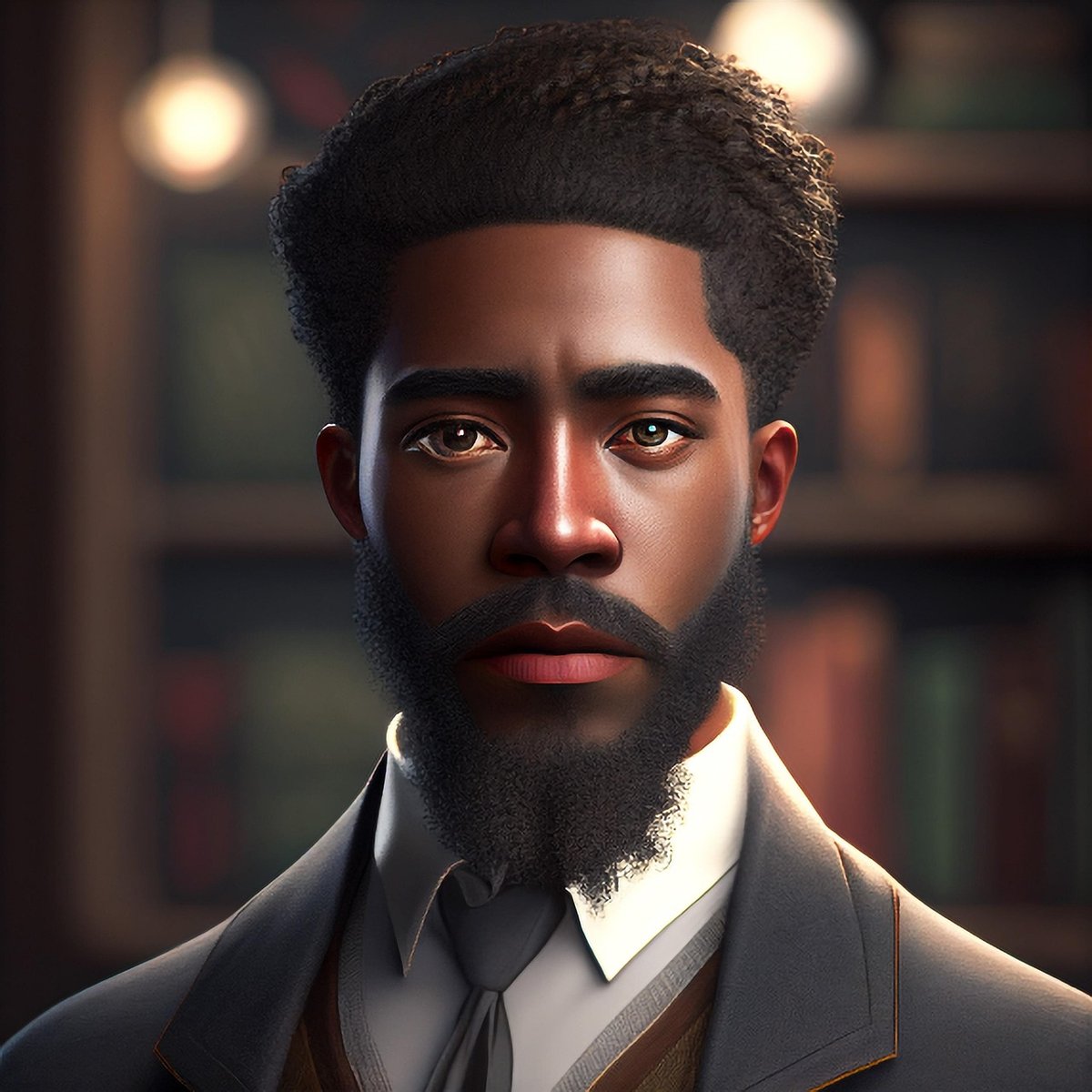
The digital world is a minefield of deception, and one of its stealthiest threats is the rise of hyper-realistic, yet entirely fabricated, human faces and bodies. Learning the skill of "Detecting AI Generated Faces & Bodies" is no longer a niche expertise but a vital defense in an age where digital trust is constantly eroding. The good news? You don't need to be a tech wizard or a forensic expert to spot these fakes. Recent research shows that just a few minutes of targeted training can dramatically improve your ability to tell real from synthetic.
At a Glance: Sharpening Your Eye Against AI Fakes
- Quick Win: As little as five minutes of targeted training can significantly improve your ability to identify AI-generated faces.
- Real Threat: These sophisticated fakes are already being used for scams, identity fraud, and bypassing security systems.
- The 'Tells': AI often leaves subtle, tell-tale rendering mistakes in hair, teeth, eyes, backgrounds, and overall symmetry.
- Superpowers & Everyday Skills: Both individuals with exceptional face-recognition abilities (super-recognisers) and those with typical skills benefit equally from this training.
- Your New Defense: Understanding these common flaws empowers you to navigate the digital world with greater confidence and security.
The Invisible Threat: Why AI-Generated Faces Demand Your Attention
Imagine seeing a profile picture on a social media site, a headshot on a professional networking platform, or even an image in a news article. You assume it's a real person. But what if it isn't? What if it's an image cooked up by artificial intelligence, designed to look utterly human, yet entirely synthetic? This isn't science fiction; it's our reality.
Advanced AI models like StyleGAN3 have become remarkably adept at generating faces that are virtually indistinguishable from real photographs. These aren't crude, pixelated images; they're often stunningly realistic, complete with nuanced expressions and lifelike textures. But beneath the surface, these creations pose genuine security risks. Dr. Katie Gray, a lead researcher from the Universities of Reading, Greenwich, Leeds, and Lincoln, warns that computer-generated faces are actively being deployed to create fake social media profiles, bypass identity verification systems, and even fabricate false documents. The implications for online safety, misinformation, and personal security are profound. You might be interacting with a scammer, an automated bot, or even a foreign operative, all hiding behind a face that never existed. To dive deeper into the broader implications, you might want to Explore AI generated people.
A Game-Changer: Just Five Minutes of Training Can Sharpen Your Eye
For years, the general consensus was that humans were increasingly outmatched by AI's ability to create convincing fakes. However, groundbreaking research published in Royal Society Open Science on November 12 offers a powerful counter-narrative: humans can significantly improve their detection skills with minimal effort.
The study involved 664 participants tasked with distinguishing between real human faces and StyleGAN3-generated fakes. Before any training, the results were sobering: individuals with typical face-recognition abilities correctly identified fake faces only 31% of the time. Even "super-recognisers"—a rare group with extraordinary facial recognition skills—fared only slightly better at 41%.
Then came the game-changing intervention: a brief training procedure highlighting common computer rendering mistakes. This wasn't a lengthy course; it was a quick rundown of "tells" to look out for. The impact was remarkable. Post-training, typical participants saw their accuracy soar to 51%. Super-recognisers, already starting from a higher baseline, jumped to an impressive 64% accuracy. What's particularly intriguing is that the training affected both groups equally, suggesting it teaches fundamental visual cues that can be applied by anyone, regardless of their innate abilities. This demonstrates that arming yourself with knowledge is a powerful tool against digital deception.
What to Look For: Common AI 'Tells' to Spot a Fake
AI models, for all their sophistication, still make mistakes. These aren't always glaring errors, but subtle inconsistencies that, once you know what to look for, become much easier to spot. Think of it like learning to spot a counterfeit banknote; it’s about recognizing tiny deviations from the expected norm. Here’s a detailed breakdown of the most common "tells" that AI-generated faces and bodies exhibit:
1. Hair: Unnatural Patterns and Pixels
Hair is notoriously difficult for AI to render perfectly. Keep an eye out for:
- Blurred or "Painted" Edges: The hair might have an unnatural softness or look like it's been painted onto the head, lacking individual strand definition, especially around the edges of the face or neckline.
- Repetitive Patterns: Sometimes, you'll see repeating textures or patterns in the hair that look too uniform or synthetic.
- Strange Fading/Blending: Hair might abruptly blend into the background or show unusual color shifts.
- "Stuck" Strands: Individual strands might appear to defy gravity or be oddly rigid, not flowing naturally.
2. Teeth: The Uncanny Valley of Grins
The human mouth, particularly teeth, is another common stumbling block for AI. Scrutinize smiles for:
- Incorrect Number of Teeth: AI often struggles with the correct count and placement. You might see too many, too few, or strangely placed teeth.
- Irregular Alignment or Size: Teeth might be misaligned in odd ways, have inconsistent sizes, or vary in shape without a natural explanation.
- Inconsistent Lighting/Shading: Shadows and highlights on teeth might not match the overall lighting of the face.
- Gummy or "Too Perfect" Smiles: Sometimes, the teeth look unnaturally perfect, or the gums appear too smooth or unnaturally colored.
3. Eyes and Glasses: Reflections and Asymmetry
The eyes are often called the windows to the soul, but in AI-generated faces, they can be a window to the artifice.
- Asymmetry: Check for subtle differences in eye shape, size, or even pupil dilation between the left and right eyes.
- Unusual Reflections: Reflections in the eyes might be inconsistent, appear to be from different light sources, or contain strange, distorted patterns.
- Warped Glasses: If the person wears glasses, the frames might be slightly asymmetrical, warped, or their lenses might distort the background in an odd way.
- Lack of Iris Detail: The iris might lack the intricate detail and texture found in real eyes, appearing more like a flat color.
4. Ears and Jewelry: Distortions and Mismatches
Ears are complex, and AI frequently trips up on their intricate shapes and the way they connect to the head.
- Asymmetrical Ears: The two ears might not match in size, shape, or position on the head.
- Distorted Earlobes: Earlobes can appear strangely shaped, stretched, or disconnected.
- Mismatched Jewelry: If earrings are present, they might be different from each other, or one might appear to be floating or poorly rendered.
- Shadow Anomalies: Shadows around the ears might not align with the overall light source.
5. Backgrounds: Blurs, Artifacts, and Impossibilities
The background behind an AI-generated face is often where the most obvious "tells" appear, as AI focuses its rendering power on the face itself.
- Strange Blurring or Distortion: The background might be unnaturally blurred, contain strange pixelation, or have objects that are distorted or warped.
- Inconsistent Lighting/Perspective: The lighting in the background might not match the lighting on the face, or elements might appear at an impossible perspective.
- Abstract or Repetitive Patterns: The background might look like a random, abstract painting, or feature repeating, nonsensical patterns.
- Floating Objects: Occasionally, objects in the background might appear to float or be disconnected from the surface they should be on.
6. Skin Texture and General Anomalies: Too Perfect or Too Bizarre
The overall appearance of the skin and face can also provide clues.
- Too Smooth or Too Perfect: AI faces sometimes lack the natural imperfections, pores, and subtle blemishes of real skin. They can appear unnaturally smooth or airbrushed.
- Unnatural Blemishes: Conversely, some AI might generate "blemishes" that look artificial or out of place.
- Inconsistent Wrinkles/Age Marks: If the person is older, wrinkles might be unevenly distributed or appear in unnatural patterns.
- Strange Shadows/Highlights: Look for shadows that don't make sense given the apparent light source, or highlights that appear to float.
7. Overall Asymmetry and Uncanny Valley Feelings
The sum of these small imperfections often leads to a general feeling of unease.
- Subtle Facial Asymmetry: While real faces have some asymmetry, AI faces can have more pronounced or jarring imbalances between the two halves of the face.
- Missing or Extra Features: In some instances, very subtle things might be missing (like a reflection in a pupil) or oddly duplicated (like a faint second nostril).
- The "Uncanny Valley" Effect: Even if you can't pinpoint a specific flaw, a deep-seated feeling that "something is just off" can often be your intuition alerting you to a fake. This is the "uncanny valley" at play, where something is almost, but not quite, human.
Mastering these detection skills is more crucial than ever as AI technology advances. For more on the broader implications of these developments, Explore AI generated people to understand how these synthetic images are shaping our digital world.
Are You a Super-Recognizer? Understanding Natural Abilities
The recent research brought an interesting distinction to light: "super-recognisers." These are individuals with an extraordinary natural ability to remember and recognize faces, far beyond the average person. Think of someone who never forgets a face, even after years or brief encounters. While they are a rare gift, the study found something compelling: even super-recognisers, despite their superior natural talent, benefited just as much from the brief training as typical participants.
Before training, super-recognisers could spot fakes 41% of the time, compared to 31% for others. After training, their accuracy jumped to 64%, while typical participants reached 51%. This suggests that while some people might have a natural advantage, the underlying mechanisms for spotting AI flaws are trainable and accessible to everyone. The training provides a structured framework, giving you specific visual cues to look for, effectively "leveling up" your detection game regardless of your starting point. It's not about being born with a special power, but about knowing what to look for.
Beyond the Human Eye: The Future of AI Detection Tools
While human training proves incredibly effective, the fight against digital deception won't rely solely on our own sharpened senses. The future likely involves a complementary approach, where human vigilance works hand-in-hand with sophisticated AI detection tools.
Researchers like Dr. Gray are already looking into how super-recognisers' unique skills might complement artificial intelligence detection tools. This could mean hybrid systems where humans verify suspicious cases flagged by AI, or where AI helps train humans more effectively. Future research will also delve into how long the effects of this training last. Do these newfound detection skills stick with us over time, or do we need periodic refreshers? Understanding this will be crucial for developing sustainable strategies to maintain digital security. It’s a dynamic landscape, and staying informed is key. To understand the wider context of this technology, you can Explore AI generated people and its impact.
Putting Your New Skills to the Test: Practical Steps
Now that you're armed with the knowledge of what to look for, how can you practice and integrate these skills into your daily online life?
- Conscious Observation: The next time you're scrolling through social media or news feeds, consciously practice looking for the "tells" we discussed. Don't just passively view images; actively scrutinize them.
- "Is It Real?" Challenge: When you encounter a face online that seems a little too perfect or subtly off, take a moment to apply your checklist:
- Hair: Are the strands natural? Any weird blurring?
- Teeth: Correct number? Evenly spaced without being robotic?
- Eyes: Any asymmetry? Odd reflections?
- Background: Does it make sense? Is it consistent with the lighting?
- Cross-Reference (When Possible): If you're suspicious of a profile picture, see if the person has other images. Consistency across multiple images can be a good sign of a real person, though deepfakes can now create multiple consistent images. Inconsistent details across different images can be a red flag.
- Trust Your Gut (and Then Verify): That "uncanny valley" feeling is often your brain picking up on subtle cues faster than you can consciously process them. When you feel that sense of "offness," use it as a trigger to apply your trained eye.
- Stay Updated: AI technology is constantly evolving. Keep an eye on news and expert analysis about new AI capabilities and new detection methods. The "tells" might change as AI improves, so continuous learning is important.
This isn't about becoming paranoid about every image you see, but about cultivating a healthy skepticism and an informed eye. It's about empowering yourself to make better judgments in a world saturated with synthetic media.
Your Role in the Fight Against Digital Deception
The proliferation of AI-generated faces and bodies is more than just a technological marvel; it’s a societal challenge impacting trust, security, and the very fabric of our digital interactions. From sophisticated phishing attempts to the spread of misinformation, these fakes are powerful tools in the wrong hands.
By investing just a few minutes in understanding the common weaknesses of AI-generated imagery, you become a more discerning online citizen. You're better equipped to protect yourself from scams, identify potentially misleading content, and contribute to a safer digital environment. This isn't just a skill for tech enthusiasts; it's a fundamental digital literacy skill for everyone navigating the modern internet. Our collective ability to spot these fakes strengthens our online defenses and helps us build a more trustworthy digital world. Continuing to learn about the broader impact of AI on identity is essential; Explore AI generated people to deepen your understanding.