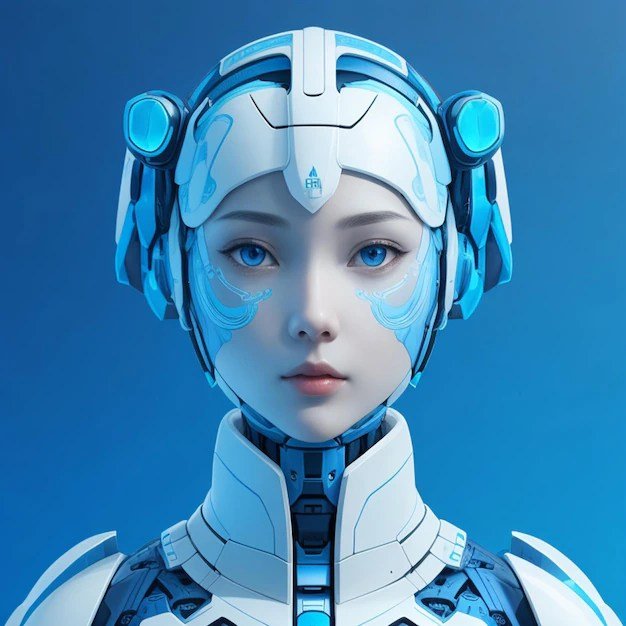
The digital landscape is abuzz with the potential of artificial intelligence, and one of its most captivating frontiers is the art of Creating & Customizing AI Characters. Imagine populating your virtual worlds, marketing campaigns, or even personal projects with digital beings that are not just visually stunning but also embody unique personalities, backstories, and interactions. This isn't science fiction anymore; it's a rapidly evolving reality, putting the power of digital persona design directly into your hands.
This guide will demystify the process, transforming you from an observer into a creator. We’ll explore how to conceptualize, generate, and refine AI characters that resonate, ensuring they're not just pixels on a screen but compelling digital entities.
At a Glance: What You'll Learn
- Understand the "Why": Discover the impact and applications of AI characters across various industries.
- Master the Workflow: Learn a structured approach to conceptualizing, generating, and customizing your digital personas.
- Leverage AI Tools: Get familiar with how platforms like OpenArt.ai and Musely.ai empower creation.
- Deep Dive into Customization: Explore techniques for refining visuals, personality, and backstory for unparalleled uniqueness.
- Embrace Best Practices: Design ethical, consistent, and believable AI characters.
- Navigate Challenges: Identify common pitfalls and learn strategies to overcome them.
Beyond the Pixels: Why AI Characters Matter
AI characters are more than just digital avatars; they are sophisticated constructs capable of embodying a wide range of attributes, from hyper-realistic human likenesses to fantastical creatures. They bridge the gap between imagination and tangible digital presence, becoming essential components in everything from interactive storytelling to brand engagement.
Think about it:
- Storytelling and Entertainment: Imagine a novelist prototyping characters, an animator generating an entire cast for a short film, or a game developer populating expansive worlds with unique NPCs.
- Marketing and Branding: Brands can create AI influencers, virtual spokespeople, or interactive assistants that perfectly align with their identity, offering personalized customer experiences around the clock.
- Education and Training: AI characters can act as tutors, role-playing partners, or historical figures, making learning more immersive and engaging.
- Virtual Companionship and Therapy: Developing empathetic AI personas capable of natural conversation can offer support and interaction.
The demand for distinct, adaptable, and emotionally resonant digital personas is skyrocketing, pushing the boundaries of what's possible in digital interaction.
The Art and Science of Crafting AI Personas
Building an AI character is a blend of creative vision and technical execution. It starts with an idea and evolves through iterative refinement, guided by powerful AI tools.
Step 1: Envisioning Your Digital Muse
Before you touch any AI generator, solidify your concept. A clear vision acts as your north star, guiding every decision.
1. Define the Purpose & Audience:
- Why are you creating this character? Is it for a game, an educational tool, a marketing campaign, or a personal art project?
- Who is this character for? Understanding your audience helps tailor personality, appearance, and voice. A character for a children's book will differ vastly from one for a corporate training module.
2. Outline the Core Identity:
This is where you give your character a soul, or at least a convincing illusion of one. - Personality Traits: Is your character introverted or extroverted? Sarcastic or earnest? Brave or timid? List a few key adjectives.
- Role/Archetype: What function does this character serve? A mentor, a villain, a sidekick, an everyman, an expert?
- Backstory (Even a Simple One): Where do they come from? What are their motivations, fears, and dreams? Even a few sentences can add incredible depth and guide their appearance and dialogue. Musely.ai, for instance, emphasizes creating "detailed personas, appearances, and backstories in seconds," highlighting the importance of this foundational step.
Step 2: Choosing Your Creative Canvas – AI Character Generators
The market for AI character generation tools is expanding rapidly, each offering unique strengths. Your choice of platform will significantly influence your workflow and output.
- Exploring Different Platforms: Many platforms offer varying levels of control and specialization. Some are tailored for hyper-realistic human models, while others excel at stylized or fantastical creations.
- OpenArt.ai, for example, streamlines the process for image creation by allowing you to "upload an image to guide the design," essentially giving the AI a visual starting point. You then "describe the character" with text prompts, and "preview visuals before finalizing." This combination of visual and textual input can be incredibly powerful for maintaining aesthetic consistency.
- Musely.ai boasts an "AI Character Generator to instantly create unique AI characters." It's designed for speed and "unparalleled customization" with "intuitive design," making it suitable for generating diverse character content quickly. This tool emphasizes its ability to design "detailed personas, appearances, and backstories in seconds," perfect for rapid prototyping or large-scale character needs.
- Understanding Tool Features:
- Image-to-Image / Image Guidance: Uploading a reference image (like OpenArt.ai offers) can kickstart the process, ensuring your character aligns with a specific style or individual.
- Text-to-Image / Text Prompts: This is the core of most AI generation. Describing your character's appearance, clothing, setting, and mood in plain language.
- Pre-built Libraries/Templates: Some platforms, like OpenArt.ai's "Character Library," allow you to "utilize existing characters for a quick start," which can save time and provide inspiration, especially when you need variations on a theme.
- Advanced Customization Sliders/Options: Many tools go beyond simple text, offering sliders for age, gender, ethnicity, expression, pose, and even costume elements, giving you fine-grained control.
Step 3: Bringing Your Vision to Life with AI
With your concept clear and your tool chosen, it's time to generate and iterate.
1. Prompt Engineering for Appearance:
This is where your descriptions translate into pixels. Be specific, but also understand that AI interprets language in unique ways.
- Visual Details: Break down your character's look.
- Hair: Color, length, style (e.g., "long flowing crimson hair, braided").
- Eyes: Color, shape, expression (e.g., "piercing emerald eyes with a hint of melancholy").
- Facial Features: Jawline, nose, mouth (e.g., "sharp jawline, small scar above the left eyebrow").
- Body Type: Build, height, posture (e.g., "athletic build, tall and slender").
- Attire: Style, color, materials, accessories (e.g., "worn leather armor, intricate silver clasps, a flowing midnight-blue cape").
- Art Style: If you have a specific aesthetic in mind, include it (e.g., "in the style of a Hayao Miyazaki film," "photorealistic," "pixel art").
2. Defining Personality & Voice:
While current AI image generators focus on visuals, the next generation of tools (and how you use the output) allow you to integrate personality. - Dialogue Examples: How does your character speak? Are they formal, casual, witty, gruff? Writing sample lines can help you (or another AI) develop their unique voice.
- Mannerisms: Do they fidget? Gesture grandly? Have a signature pose? This influences how you might describe them or animate them later.
3. Crafting a Compelling Backstory:
Even if the AI doesn't "read" the story, it informs your prompts and subsequent refinements. - Key Life Events: What significant moments shaped them?
- Goals & Conflicts: What do they want, and what stands in their way?
- Relationships: Who are the important people (or AI characters) in their life?
4. Iterative Design: The Refine-and-Repeat Cycle:
AI character creation is rarely a one-shot deal. - Generate and Review: Create initial versions based on your prompts.
- Identify Strengths and Weaknesses: What works? What doesn't? Is the hair right but the eyes are off?
- Refine Prompts: Adjust your descriptions, add new details, or remove conflicting instructions. If you're using OpenArt.ai, you'll be "previewing visuals before finalizing," giving you crucial points for iteration.
- Repeat: Continue generating and refining until your character matches your vision. This iterative process is key to achieving "unparalleled customization" as Musely.ai promises.
Mastering Customization: Beyond the Basics
True customization goes beyond initial generation. It's about finessing every detail to ensure your AI character is not just unique but also perfectly suited for its intended role.
Visual Nuances: From Expressions to Attire
A character's visual appeal is the first impression. AI tools offer extensive control here.
- Style Transfer & Aesthetic Consistency: If you're creating multiple characters for the same project, maintaining a consistent art style is crucial. Many AI tools allow you to import a style reference or use specific stylization prompts.
- Pose, Gesture, and Micro-Expressions: Don't just generate a static portrait. Experiment with different poses to convey mood, action, or personality. Subtle facial expressions (a slight smirk, furrowed brow, wide-eyed wonder) can add immense depth. Advanced tools can even generate characters with specific lighting, camera angles, and backgrounds, further embedding them in a scene.
- Dynamic Wardrobe & Accessories: Your character's clothing and accessories are extensions of their personality and backstory. Customize specific items, from the cut of a jacket to the intricacies of a pendant.
Behavioral Deep Dive: Actions and Reactions
For interactive characters, customization extends to their behavior. This often involves combining visual generation with separate AI models for natural language processing (NLP) and behavioral scripts.
- Dialogue & Conversational Flow: Develop a distinct conversational style. Does your character use slang? Formal language? Are they verbose or concise? Tools can help generate dialogue consistent with personality and context.
- Emotional Intelligence & Responsiveness: How does your character react to different inputs? Can they convey joy, anger, sadness, or confusion appropriately? This involves mapping emotional states to expressions, vocal tones (if applicable), and even body language.
- Goal-Oriented Actions: If your character is an assistant or an agent, customize their directives and objectives. What tasks can they perform? How do they prioritize?
Contextual Adaptation: Shaping Characters for Specific Scenarios
A powerful AI character can adapt its presentation and behavior based on its environment or purpose.
- Gaming & Interactive Experiences: For game characters, consider variations for different states (e.g., "idle," "attacking," "injured"). Their appearance and reactions might change based on story progression or player choices.
- Brand Storytelling & Marketing: An AI character representing a brand might need different outfits or expressions for various campaigns – a casual look for social media, a professional one for a webinar. Their messaging must be meticulously aligned with brand voice.
- Virtual Companions & Assistants: These characters require a high degree of empathy and adaptability. Customizing their conversational algorithms to remember past interactions and learn user preferences makes them more effective and engaging. When you Explore AI generated people more broadly, you'll find that the line between simple character and fully interactive digital agent is increasingly blurred, offering endless possibilities for dynamic, context-aware digital companions.
Best Practices for Building Believable AI Characters
Crafting truly compelling AI characters requires more than just knowing how to use the tools; it demands a thoughtful approach to design and ethics.
Consistency is Paramount: Visuals, Voice, and Behavior
Inconsistency shatters immersion. If your character looks like a seasoned warrior but speaks like a timid librarian, the illusion breaks. Ensure:
- Visual-Personality Alignment: Does their appearance genuinely reflect their personality?
- Voice-Behavior Harmony: Does their dialogue and action match their established traits?
- Backstory Coherence: Do all elements of their design and interaction make sense within their established lore?
Embrace Iteration: AI is a Creative Partner
Think of AI as a hyper-efficient design assistant. It can generate thousands of variations, but you are the director. Don't settle for the first output. Experiment with prompts, leverage different seed values, and embrace the process of generating, reviewing, and refining. The more you iterate, the closer you'll get to your ideal character.
Ethical Design Principles: Avoiding Bias, Promoting Inclusivity
AI models are trained on vast datasets, which can sometimes reflect real-world biases. It's your responsibility as a creator to actively counteract this:
- Challenge Stereotypes: Intentionally design characters that defy common tropes or cliches.
- Promote Diversity: Create a range of characters that represent different backgrounds, cultures, and identities.
- Review Outputs for Bias: Scrutinize generated images and text for unintended stereotypical representations and adjust your prompts accordingly.
Understanding AI's "Black Box": Anticipating Unexpected Outputs
AI can sometimes produce bizarre, unexpected, or subtly "off" results. This is part of the creative process. Instead of getting frustrated, learn to:
- Identify "AI Tells": Recognize common artifacts or distortions that indicate an AI generation.
- Adjust Prompts to Counteract: If eyes are consistently misaligned, add prompts like "perfectly symmetrical eyes" or "detailed, realistic eyes."
- Leverage Inpainting/Outpainting: Many tools offer features to selectively edit parts of a generated image, allowing you to fix small imperfections without regenerating the entire character.
The Power of Prompt Refinement: Specificity is Your Friend
Your prompts are the primary way you communicate with the AI.
- Be Specific: Instead of "a girl," try "a young woman with fiery red hair, wearing a worn leather jacket, standing under a streetlamp."
- Use Adjectives and Verbs: "Gothic architecture, menacing aura" vs. "building."
- Iterate on Keywords: If "happy" isn't working, try "joyful," "elated," "beaming."
- Experiment with Negative Prompts: Tell the AI what not to include (e.g., "ugly, deformed, blurry").
Common Hurdles & How to Clear Them
Even with the best tools and intentions, you might run into some snags. Here's how to troubleshoot.
1. "Generic" Outputs:
- Problem: Your characters look too much like stock images or lack distinctiveness.
- Solution: Lean into niche details. Add unique scars, specific styles of jewelry, unusual clothing patterns, or highly descriptive personality traits in your prompts. Reference specific artists or art styles for a unique aesthetic.
2. Inconsistent Personalities: - Problem: The character's dialogue or behavior contradicts their established backstory or visual cues.
- Solution: Create a "character bible" – a document outlining every detail of your character. Refer back to it constantly. For interactive AI, ensure your conversational model is trained on consistent examples of their voice and mannerisms.
3. Ethical Missteps: - Problem: Your character unintentionally perpetuates stereotypes or exhibits biases.
- Solution: Actively seek diverse reference images and descriptive terms. Engage in critical self-reflection and, if possible, get feedback from others to identify blind spots. Regularly review AI model updates and best practices for ethical AI.
4. Technical Glitches or Limitations: - Problem: The AI struggles with specific features (e.g., hands, complex machinery) or a certain aesthetic.
- Solution: Understand the current limitations of the AI model you're using. For difficult elements, try generating them separately and compositing, or use inpainting/outpainting features to refine specific areas. Some platforms, like OpenArt.ai, require users to "sign in to view their characters," which can sometimes be a technical step if you're not seeing your past work. Just ensure you're logged in correctly!
The Future is Now: Evolving AI Character Creation
The journey of AI character creation is just beginning. As models become more sophisticated, we're likely to see:
- Real-time Personalization: Characters that adapt their appearance and behavior on the fly based on user interaction or changing environmental factors.
- Autonomous Character Development: AI systems capable of generating entire cast rosters with interlocking backstories and relationships, perhaps even evolving them over time.
- Democratization of Digital Storytelling: Even more intuitive tools will emerge, empowering creators of all skill levels to bring complex digital narratives and personas to life with unprecedented ease. The current capabilities offered by platforms like Musely.ai, enabling "instant" creation for "any project," are a clear indicator of this trend.
Your Next Steps: Sculpting Your Own Digital Soul
You now have a comprehensive understanding of what it takes to embark on the exciting journey of creating and customizing AI characters. The tools are powerful, the possibilities are vast, and your imagination is the only real limit.
Here’s your action plan:
- Start with a Vision: Don't just generate aimlessly. Outline a clear purpose, personality, and basic backstory for your first character.
- Explore the Tools: Dive into platforms like OpenArt.ai or Musely.ai. Experiment with their features. Upload an image to guide your design, describe your character with rich detail, and observe how the AI interprets your words.
- Practice Prompt Engineering: The more you describe, iterate, and refine, the better you'll become at coaxing unique creations from the AI.
- Embrace Iteration: Don't be afraid to generate dozens of versions. The magic happens in the refinement.
- Think Ethically: Always consider the implications of your creations and strive for diversity and inclusivity.
The world is ready for your unique digital personas. Go forth and create!